
Science & Technology
Webb found water-and-carbon-dioxide ice throughout a young star’s debris disk
Infrared spectra directly detected mostly amorphous water ice mixed with carbon dioxide around Beta Pictoris, suggesting frequent low-speed collisions among icy bodies.
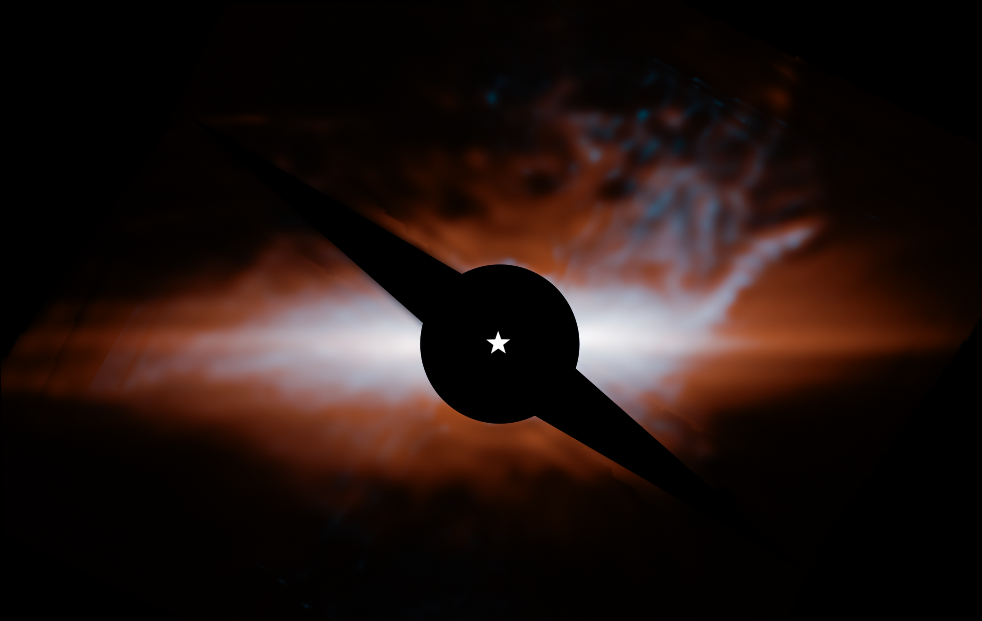
The James Webb Space Telescope has directly detected water ice and carbon-dioxide ice in the debris disk around Beta Pictoris, a roughly 20-million-year-old star system about 64 light-years away. Astronomers had expected ice there, but earlier searches had not found its spectral signature.
Webb’s near-infrared spectrograph mapped reflected starlight on both sides of the disk. The team found that less than 7% of the water ice could be crystalline, with roughly one carbon-dioxide molecule for every ten water molecules in the favored interpretation. The broadly similar signatures across the disk point toward frequent, relatively gentle collisions among icy bodies rather than one recent smashup.
The finding offers a close look at the raw materials and churn of a young planetary system. It is based on spectra and modeling rather than physical samples. The lead image is a rights-cleared 2024 Webb MIRI composite of Beta Pictoris, not the new spectrum itself.