
The Discovery File
A hidden companion explains a giant star’s 113-day outbursts
X-ray observations indicate that a neutron star or stellar-mass black hole pulls material from AT 2016blu at each close approach.
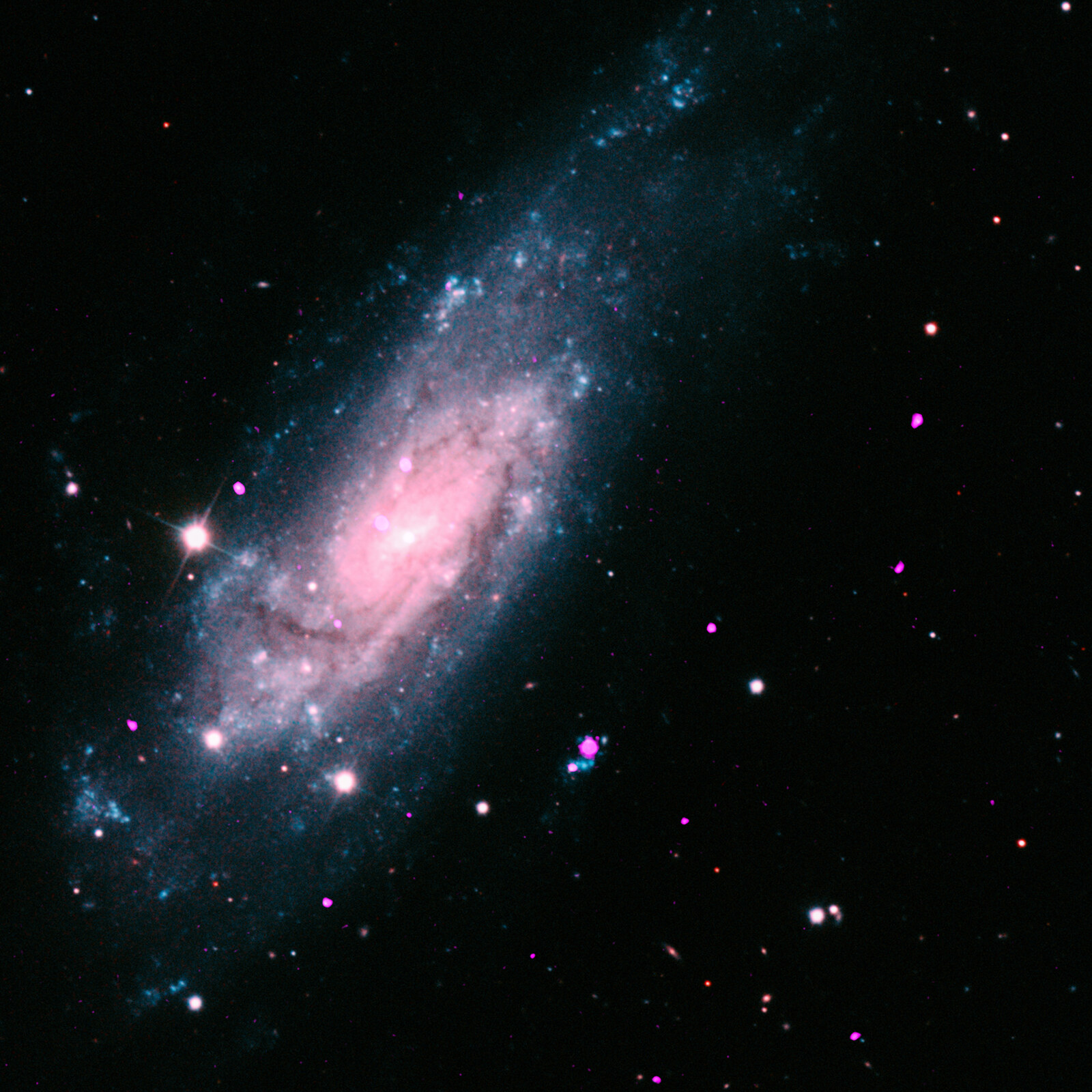
Every 113 days, the massive star AT 2016blu brightens dramatically. Astronomers have now caught the high-energy trigger: a hidden compact companion swinging close enough to pull away stellar material.
Chandra observations taken during a March 2026 outburst found the system at least 100 times brighter in X-rays than archival observations from 2001 and 2002. The best explanation is a neutron star or stellar-mass black hole in an elongated orbit. Captured gas heats to X-ray temperatures, and surrounding material then glows in visible light.
The companion has not yet surrendered its exact identity, and AT 2016blu sits about 30 million light-years away in NGC 4559. But a 15-year blinking mystery now has a working mechanism—and the first X-ray detection of this class of erupting star.