
The Discovery File
Chandra caught the X-ray heartbeat of a star with a mysterious 113-day rhythm
A 2026 observation found AT2016blu at least 100 times brighter in X-rays than earlier views, strengthening the case for a hidden compact companion.
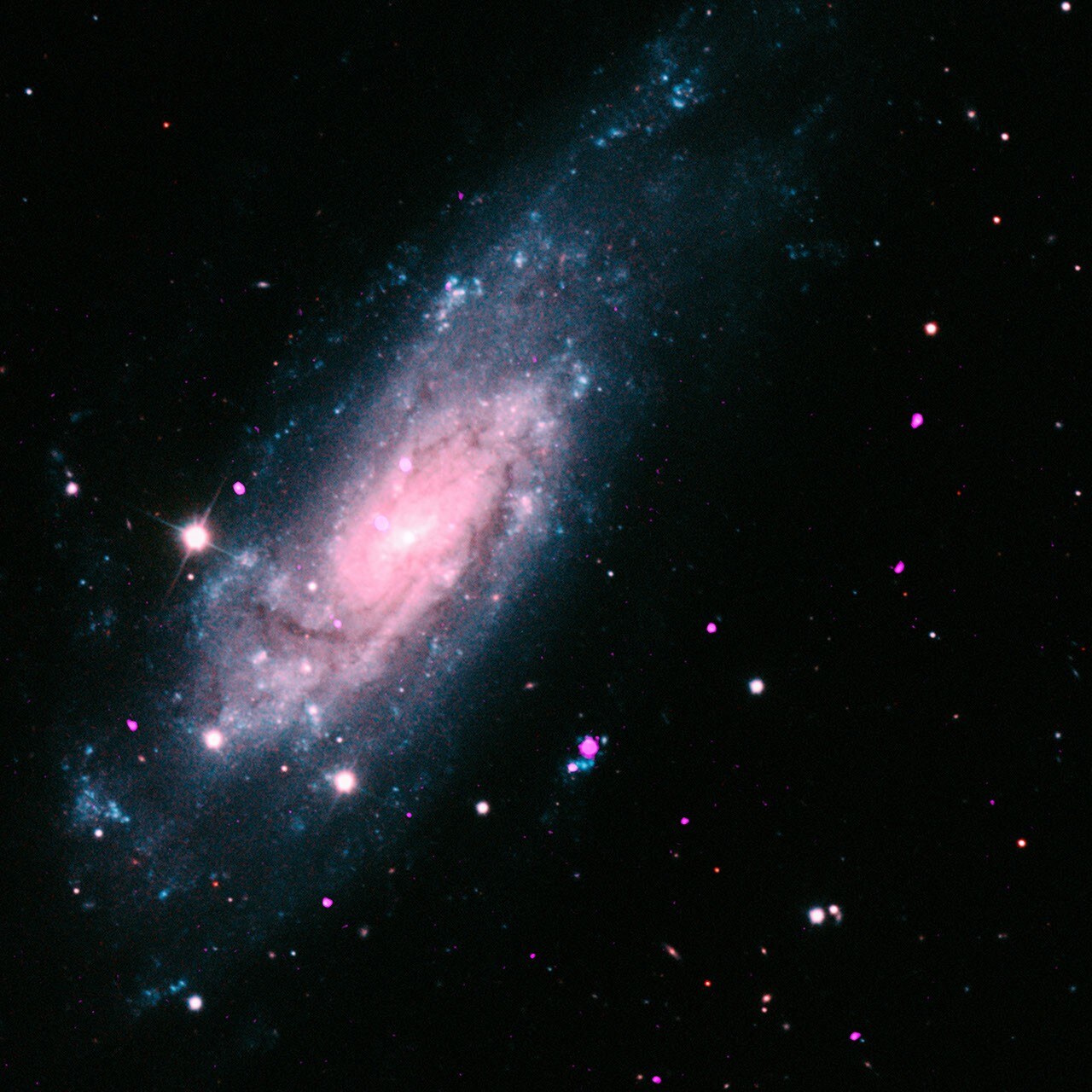
In galaxy NGC 4559, about 30 million light-years away, the object AT2016blu has produced at least 27 optical outbursts since 2012, roughly every 113 days. Chandra caught it during a March 2026 outburst and found its X-ray output at least 100 times brighter than in 2001–02 observations.
That first X-ray detection for this class points toward a massive star interacting with a hidden neutron star or stellar-mass black hole, but the companion’s identity remains an inference rather than a photograph or settled diagnosis.
The result gives astronomers a new signal to test against the repeating flashes—and turns a cosmic mystery from one blinking light into a multiwavelength conversation.