
Science & Technology
Hubble helps explain why small galaxies lose so much of what their stars make
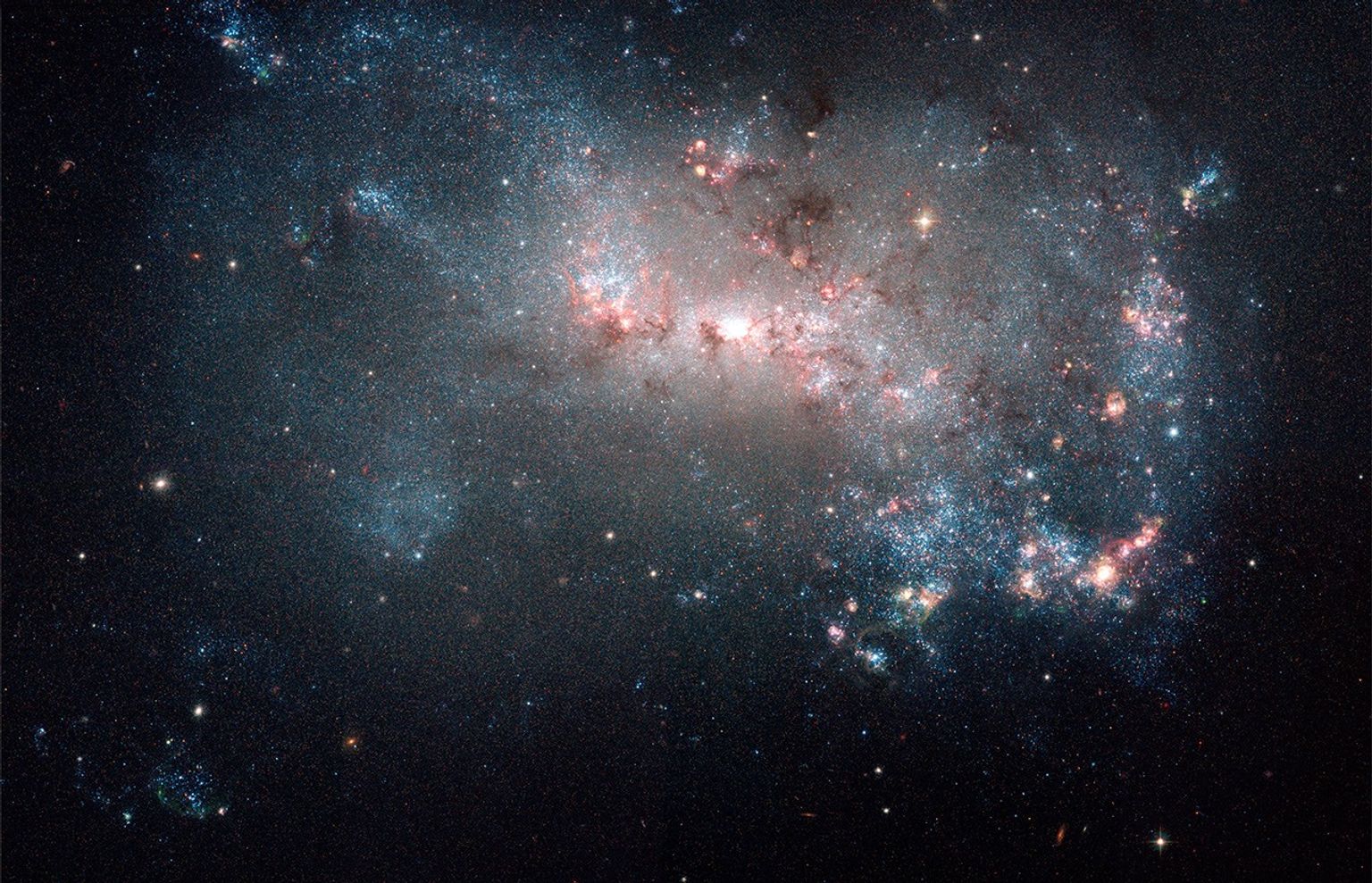
Stars make oxygen, but small galaxies apparently struggle to keep it. A study of 37 nearby dwarf galaxies found far less oxygen than simulations predict, giving astronomers a sharper clue to how galaxies enrich the space around them.
The GLOW team combined archival Hubble images with infrared and radio observations to reconstruct stellar histories and trace oxygen. The results point toward winds powered by massive stars and supernova explosions ejecting material more effectively than current models expect.
This is progress in explaining a cosmic accounting problem, not a photograph of every missing oxygen atom. Researchers still cannot say whether most of it sits in diffuse gas around these galaxies or has escaped farther into intergalactic space. The paper appeared November 2. By exposing the mismatch between models and observations, the work gives astronomers something precise to improve—and a better question to ask of the next observations.