
Science & Technology
NASA used powered Earth flybys for the first time to send twin spacecraft toward Mars
Both ESCAPADE spacecraft combined Earth’s gravity with nine-minute engine burns and are now on course to reach Mars in September 2027.
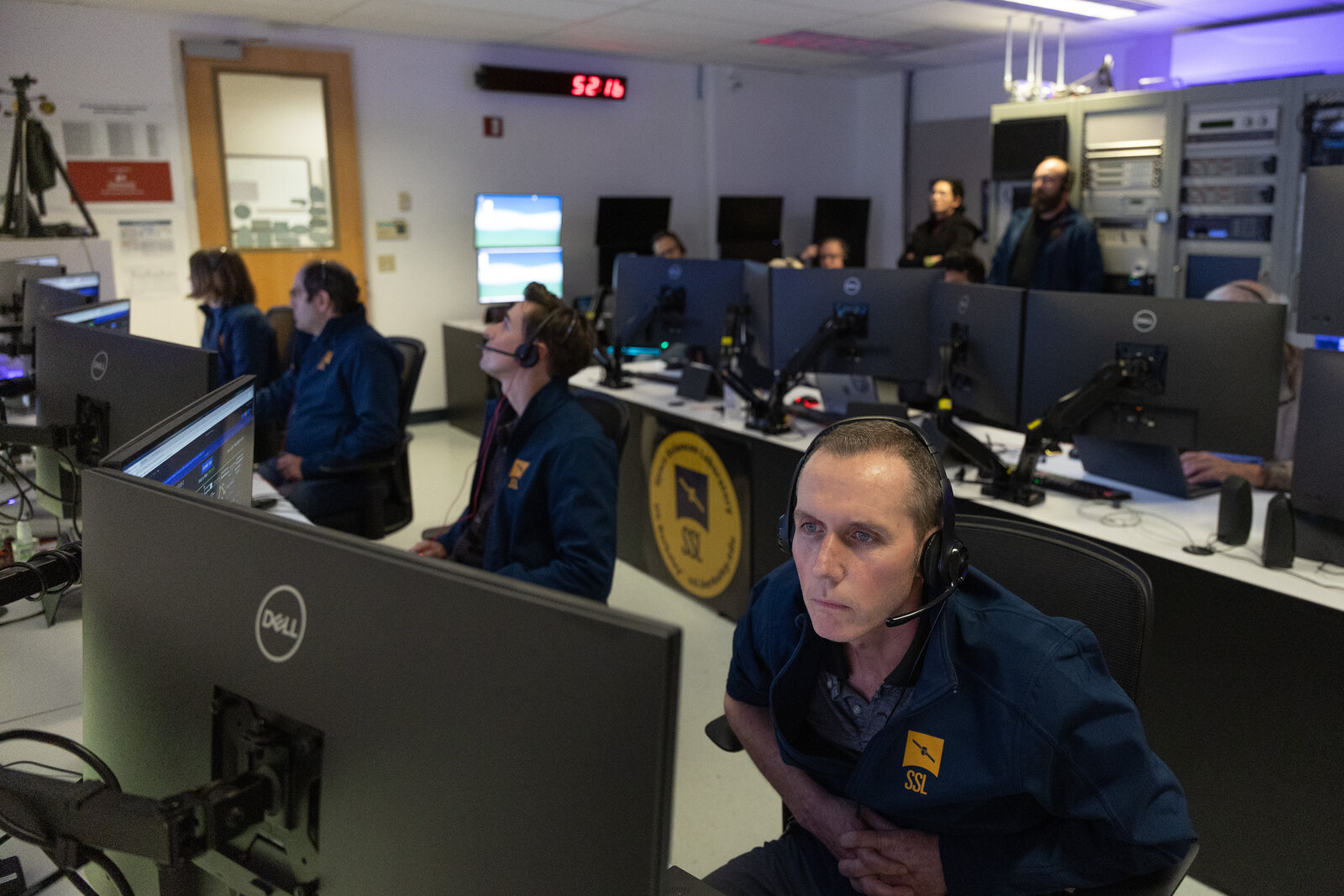
NASA’s twin ESCAPADE spacecraft left Earth with an unusual itinerary: launch in 2025, loop near the Earth–Sun L2 point, come back, and then use home as a catapult. On November 7 and 9, both craft completed the crucial move—a close Earth pass paired with an approximately nine-minute engine burn.
The first passed about 1,000 miles above Earth; the second came within roughly 650 miles. NASA says these were its first powered Earth flybys used to send spacecraft toward Mars. The route lets a small mission launch outside the narrow direct-to-Mars window that normally arrives every two years. Both craft are now on a ten-month interplanetary cruise and are scheduled to reach Mars on September 7 and 9, 2027.
Both craft are now on a roughly ten-month interplanetary cruise, with burns to enter Mars orbit planned for September 7 and 9, 2027. Trajectory corrections, orbit insertion and months of formation setup still lie ahead. Once in formation, the pair will measure how the solar wind interacts with Mars’s atmosphere from two locations. For now, the achievement is elegant enough: two spacecraft came home precisely so Earth could send them farther away.