
Science & Technology
A gentle blue glow is pushing NASA’s Psyche toward a metal-rich asteroid.
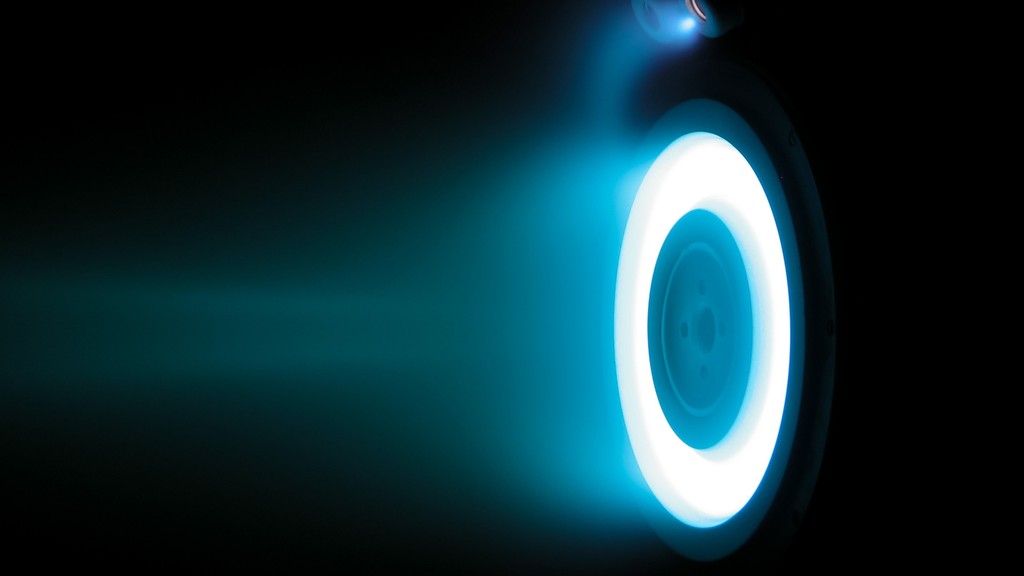
Deep-space travel does not always require a dramatic blast. For NASA’s Psyche spacecraft, a faint blue glow and a very gentle push can do the work—as long as they keep going.
After using Mars for a gravity assist, Psyche began near-continuous electric propulsion on September 28. As of October 22, the spacecraft was on course for its planned rendezvous with the metal-rich asteroid Psyche in summer 2029. Its thrusters are expected to operate during nearly 90 percent of the remaining cruise.
The propulsion system begins with sunlight. Large solar arrays generate electricity, and electromagnetic fields accelerate charged xenon atoms out of a thruster. Their departure pushes the spacecraft in the other direction. One of four thrusters operates at a time; the small acceleration accumulates across the long journey.
That efficiency still requires careful flying. The outgoing ions can impart a slight twisting force, so engineers use reaction wheels and changes in thruster operation to manage the spacecraft’s pointing. As Psyche moves farther from the Sun, declining available solar power also changes how hard it can thrust.
The craft has used about a third of its xenon supply since launch. The scientific destination is still ahead: a metal-rich world that may preserve clues to the interiors of early planetary building blocks. For now, the progress is quieter but essential—a working propulsion system steadily carrying an observatory toward somewhere humans have never examined up close.