
Science & Technology
Webb read a dead star’s final hours in its dust
Cassiopeia A’s dust chemistry points to internal shell mixing shortly before the star exploded.
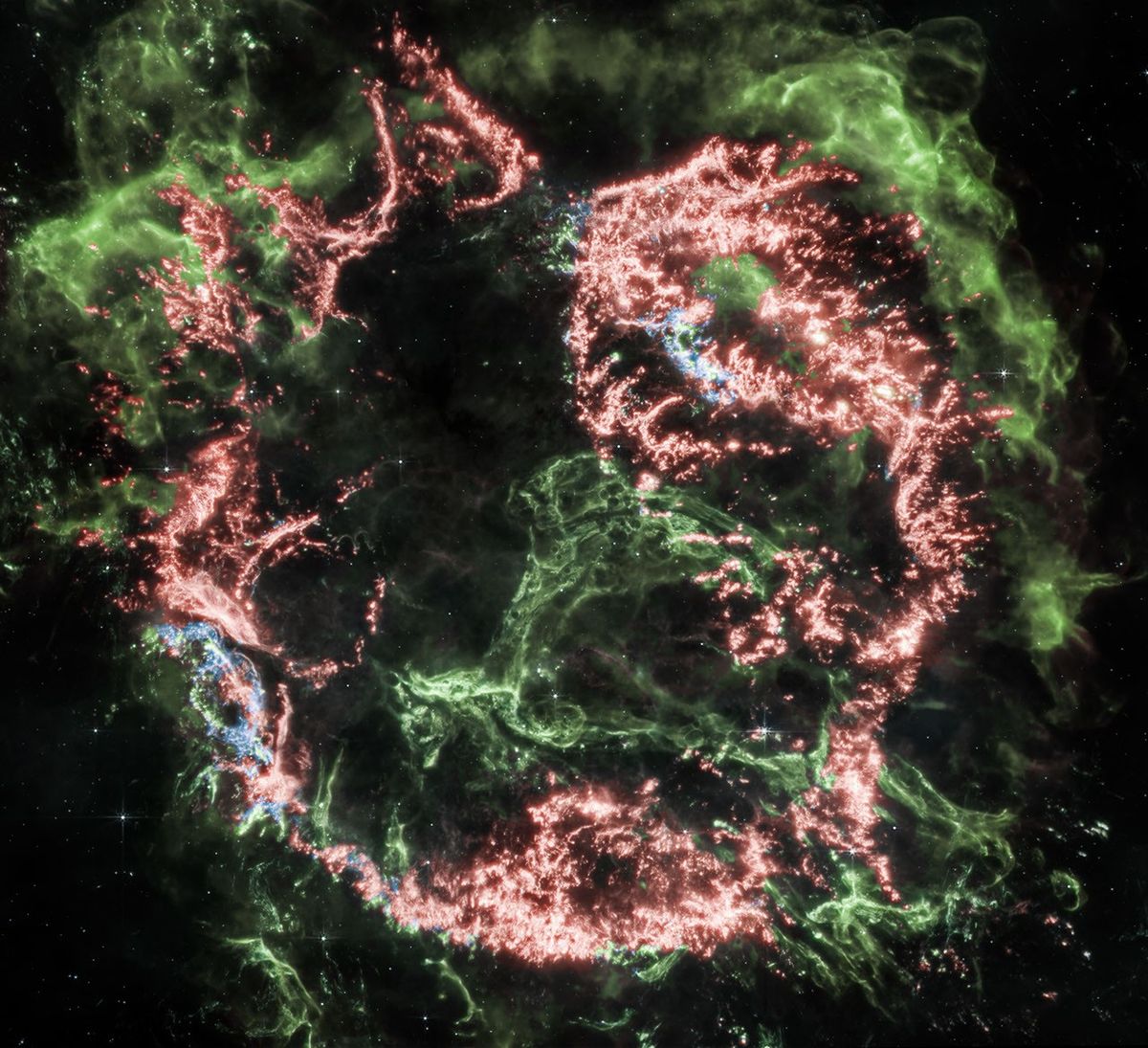
Cassiopeia A exploded centuries ago, but its dust has kept notes. NASA’s James Webb Space Telescope mapped tiny clumps across the supernova remnant and found chemical patterns that point back to a dramatic mixing event inside the original massive star shortly before it collapsed.
Webb’s mid-infrared view separated regions dominated by silica dust, carbon dust and complex magnesium silicates. By combining that detail with earlier observations from Spitzer, Chandra and XRISM, researchers found evidence that burning shells inside the star merged—possibly only hours before the explosion.
The team is reconstructing a past event from the chemistry left behind, not replaying the star’s final day. But the method matters: dust can preserve information about a star’s inner structure long after the blast.
A supernova remnant is usually described as debris. Webb has turned this one into an archive.